
The 24-Hour Hustle: How Hyper-Productivity Shapes Gen Z's Self-Worth
Earlier this year, I had a conversation with my friend that really stuck with me. Drowning in finals, running on only a few hours of sleep, and using all our extra time to search for a summer internship, we took a moment to ask ourselves when it started to feel wrong to take a break. Having recently read a book on the subject, my friend explained that, in the past, work was simply a means to support leisure time. Now, however, people are beginning to let work seep into their weekends, evenings, and even vacations — slowly setting aside personal fulfillment in the name of productivity.
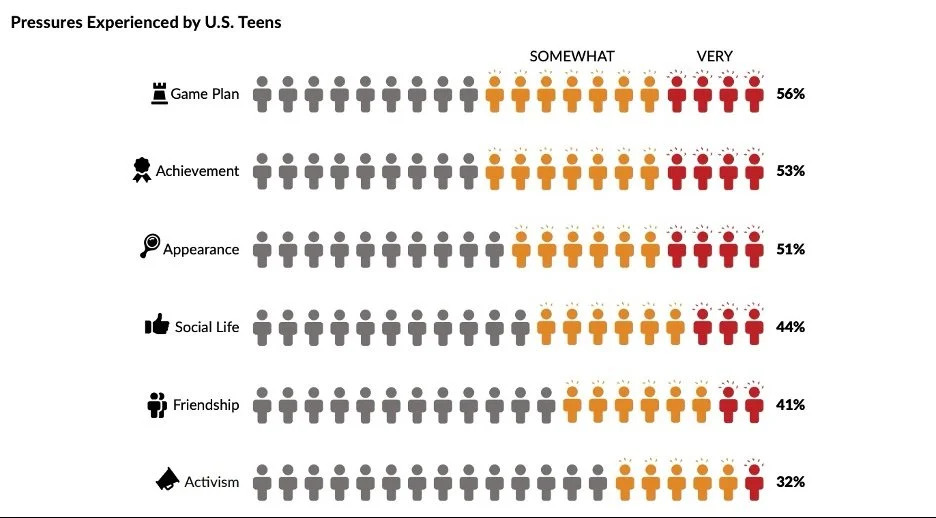
In a recent study by the Center for Digital Thriving and the Harvard Graduate School of Education, 56% of American teens said they felt pressure to have their life figured out, and 53% felt pressure to be “exceptional.” It’s not that Gen Z necessarily feels fulfilled by being productive — it’s that we feel a sense of guilt when we aren’t working. Why does this happen? Was there a specific catalyst?
Credit: Common Sense Media
As part of a community that’s constantly online and immersed in hyper-engaging social media apps, younger generations are bombarded with specific narratives of “success.” Whether it’s someone who already has their summer internship for 2027 lined up, or someone who manages to meditate, journal, exercise, study, and work all in the same day, we’ve begun to equate unproductivity with laziness and anxiety. While many adults around us stress the importance of using our adolescent years to learn more about ourselves, Gen Z often fears that exploring new interests or devoting too much time to hobbies could leave us “falling behind.”
One of the most influential aspects of social media apps like TikTok and LinkedIn contributing to this productivity phenomenon is brag culture. It’s hard not to compare your life and achievements to someone on the screen right in front of you. But, in doing so, we forget that everyone’s “perfect life” looks different. Caught up in the need to do more, we start using our peers’ achievements as benchmarks for what we should be doing.
LinkedIn, which began as a platform for connecting with recruiters and other professionals, boosts user engagement when people share career milestones and accomplishments. Gen Z, eager to showcase their wins and prove they can be just as “successful” as their peers, often sees these posts as both motivation and pressure to achieve more. As “LinkedIn envy” becomes more common, we tend to diminish our own accomplishments in comparison to others' and, consequently, feel worse about ourselves. Anything we do in our free time now begs the question: How is this helping me?
Credit: Backstage Country - How LinkedIn is Affecting Gen Z’s Mental Health More Than Instagram
Another big trend with Gen Z includes a push from influencers to “get rich young.” Similar to LinkedIn, social media algorithms on apps like TikTok and Instagram promote content that is bold, glamorous, and idealized — because that’s what is most appealing and desirable to their users. Alongside the general influencer lifestyle, many content creators push the idea of having a “side hustle,” which isn’t just about an additional source of income, but about the image of grinding harder, making use of every second, and monetizing every waking hour.
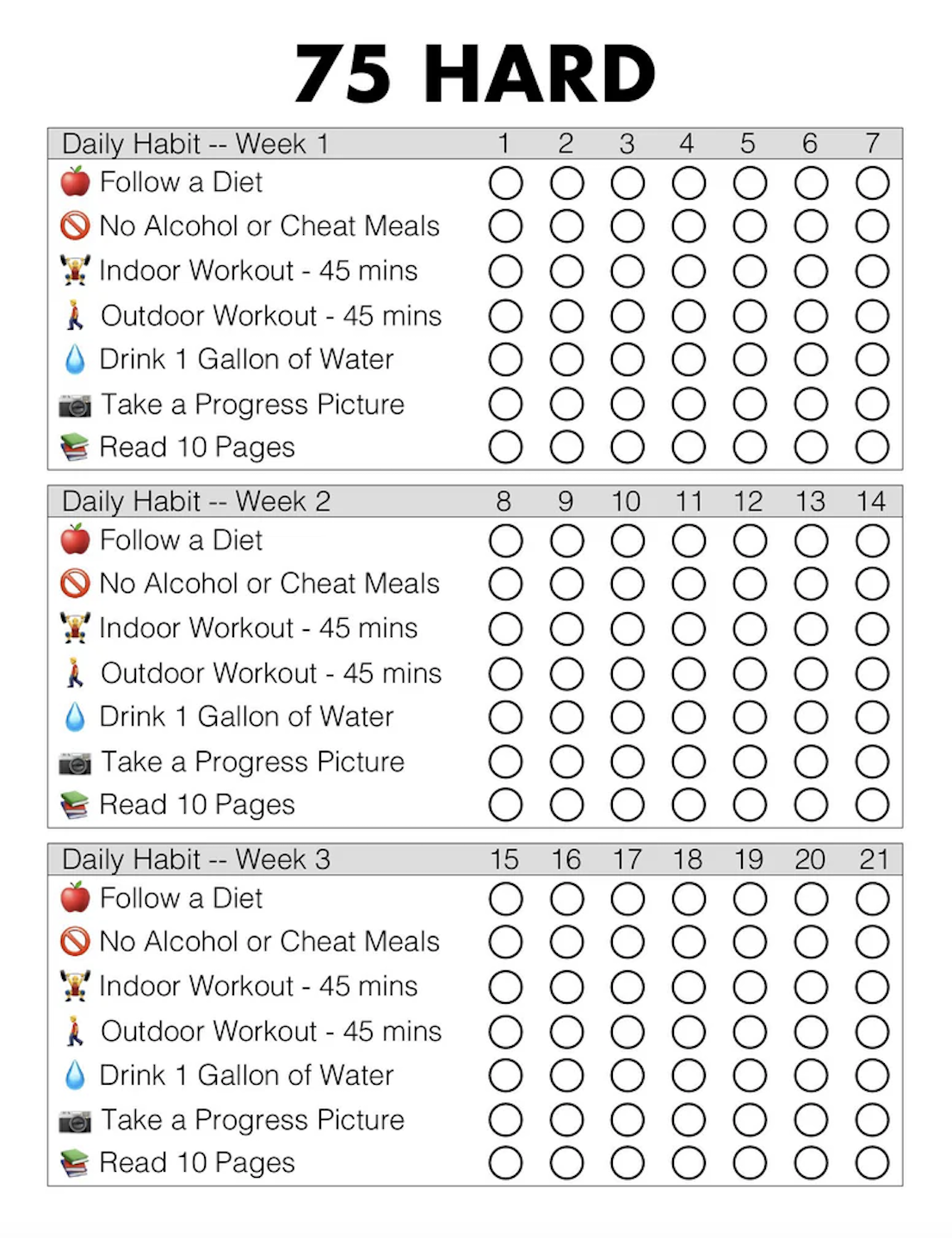
Over the past year, trends like the 75 Hard challenge, app-based jobs, and dropshipping for e-commerce have quickly gained popularity. These trends set unrealistic expectations for wealth and success, reinforcing the belief that hyperproductivity is the standard. In a survey of Gen Z social media users, 30% said they felt negatively about their financial situation after seeing others’ posts.
Credit: Transparent Labs - Mastering the 75 Hard Rules in 2026: What You Need to Know
Through comparison, Gen Z sets its standard for money and financial security at a level that is often lofty and unrealistic for the stage of life most are in. While it’s not inherently negative to want to be successful as soon as possible, it becomes harmful when people lose sight of what makes them eager to wake up every morning — trading that feeling for the pursuit of a goal they feel pressured to achieve. This goal may remain just out of reach — not because it’s unattainable, but because constant comparison leaves us feeling increasingly dissatisfied with our progress, using the guise of productivity to invalidate what we’ve already accomplished.
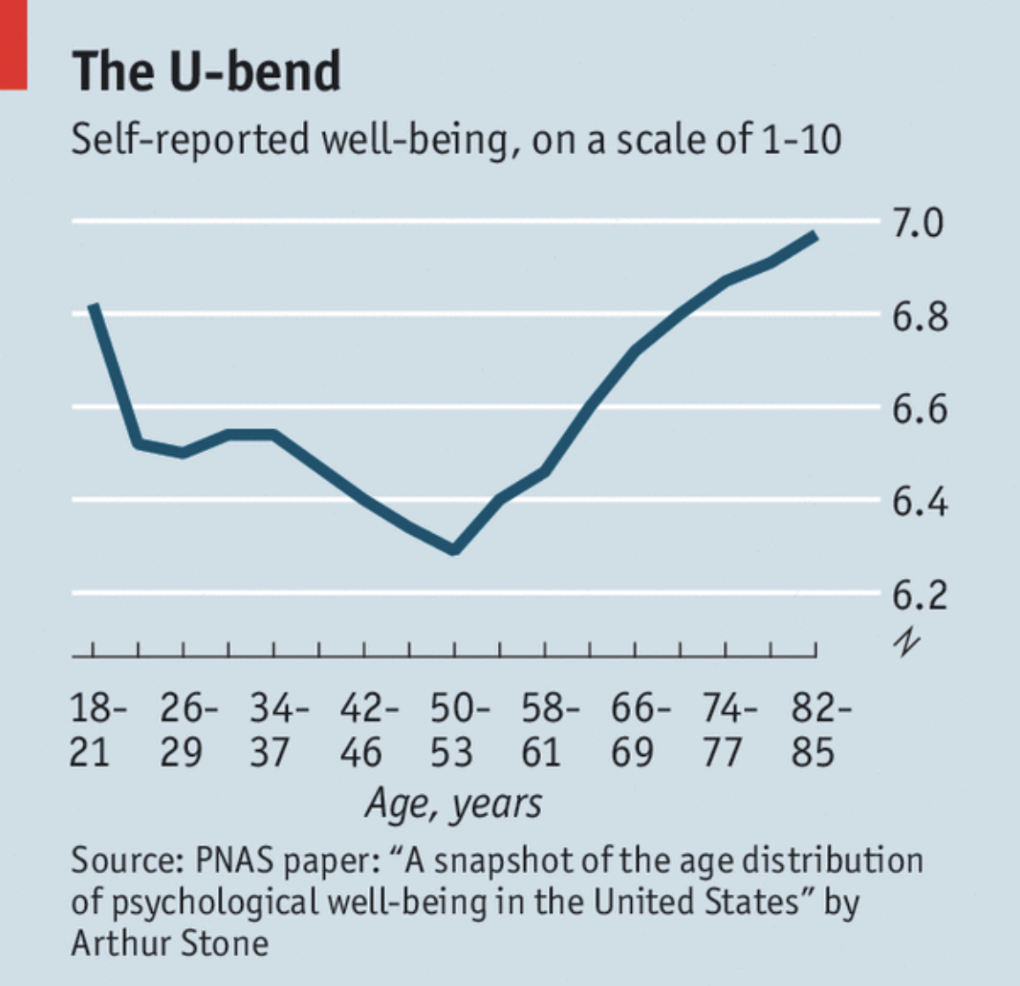
In a 2025 report on digital wellbeing, Cybersmile Foundation researchers explored how social media impacted how Gen Z viewed themselves, finding that 85% felt unsatisfied with their lives when comparing themselves to others on social media and 83% said content on social media made them feel pressured to be perfect, percentages that not only highlight feelings of dissatisfaction and anxiety among Gen Zers but also suggest a deeper issue: a sense of low self-worth. In a study comparing young people across six English-speaking countries, increased screen time was linked to young people experiencing a steady decline in happiness and life satisfaction, while older adults unexpectedly reported improved well-being. This finding is specifically interesting because it heavily contrasts what researchers have observed historically. Traditionally, well-being studies have followed a U-shaped curve: young adulthood was associated with high life satisfaction, followed by a midlife dip — or what we famously call the “midlife crisis” — and another rise in our later adult years. Data in more recent years is now showing that the U-shape is actually inversing. The time that Gen Z is meant to use for enjoying themselves and exploring new possibilities is now being spent with feelings of inadequacy and the need to “catch up” — a trend that previous generations haven’t explicitly followed.
Credit: The Economist - The U-Bend of Life
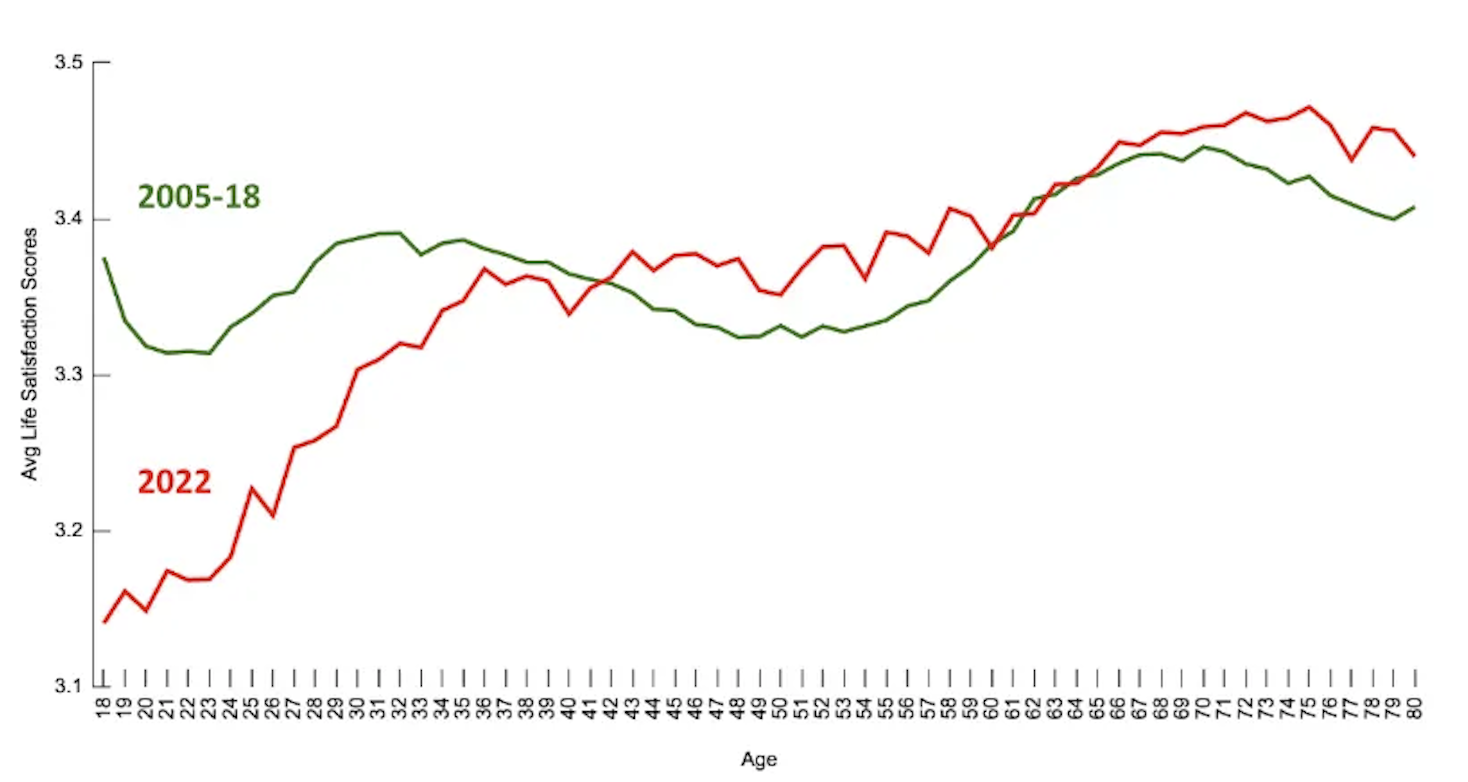
Credit: Global Interdependence Center - The Global Loss of the U-Shaped Curve of Happiness
So how can we reframe the way we think? While social media isn’t the only propagator of hyperproductivity anxiety, it’s one of the biggest influences. Taking a step back from what we see online — and taking the time to understand ourselves and what we truly want — might be the key to feeling more satisfied with where we are in life. Yes, we all have the same 24 hours, but that doesn’t mean we have to spend them the same way, or use every one of them just to avoid “falling behind.”
In a broader sense, if we all feel the same way, is anyone really coming out ahead? Gen Z may benefit from redefining the line between laziness and intentional rest. Who really defines “doing enough?” With each person having different habits, interests, and abilities, it makes more sense to take time to explore and find passion in our pursuits. Therefore, we can decide how each of us can best contribute to the world. And using all 24 hours certainly isn’t necessary for that.
If the race to catch up ended tomorrow, how would you choose to live today?